
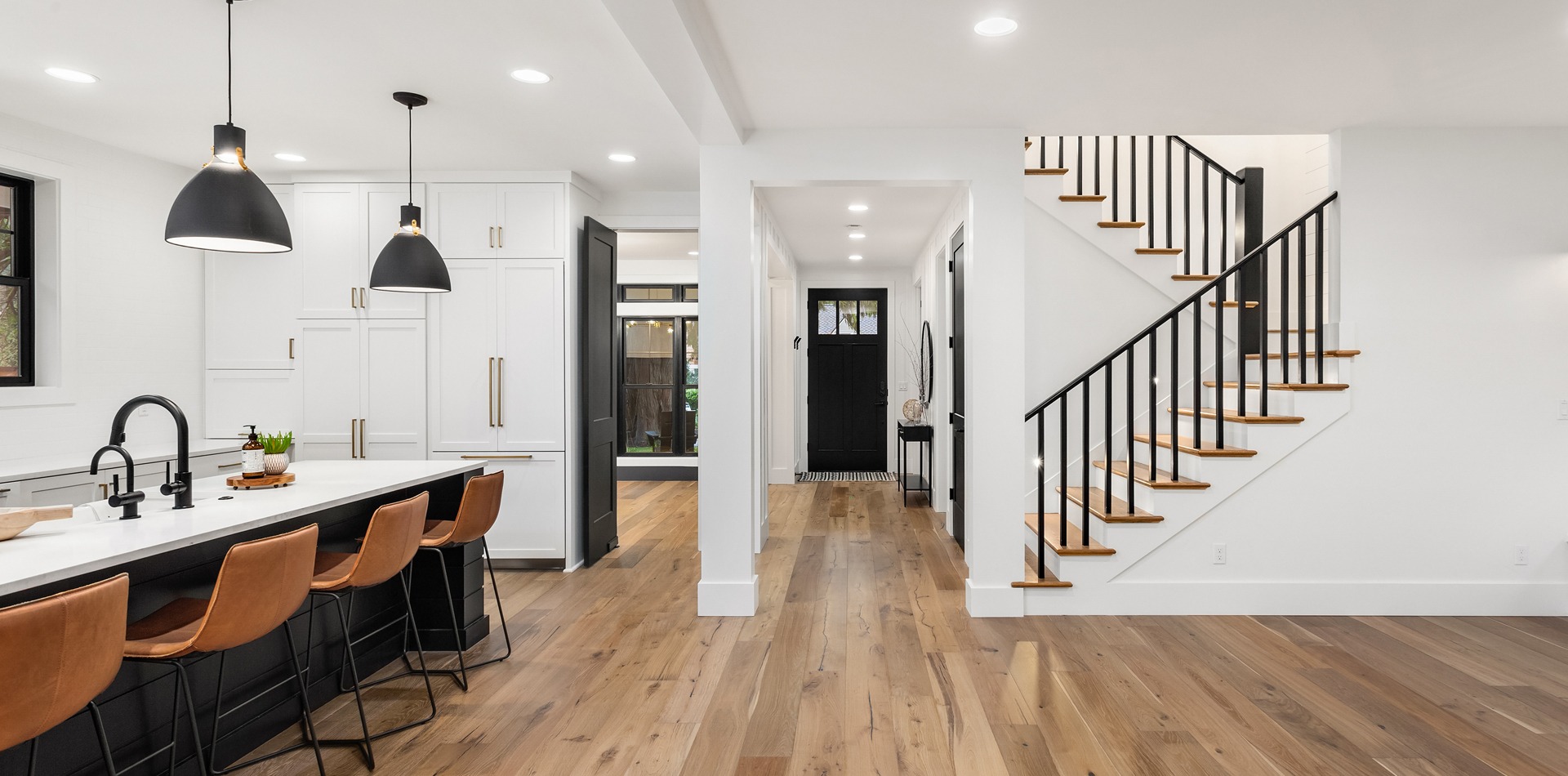
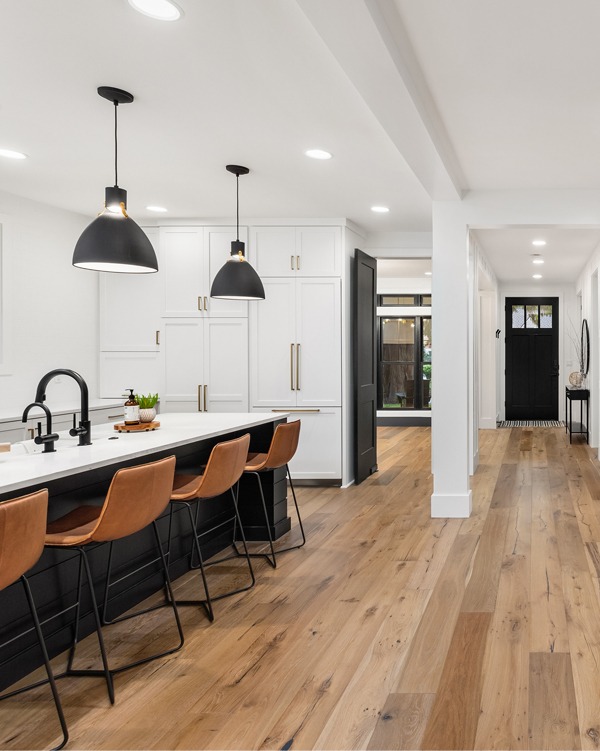
When a load‑bearing wall disappears, the first change is spatial, not structural. Rooms that once felt narrow and isolated merge into a single visual field. The eye no longer stops at hard boundaries, so even familiar square meters feel new. The same floor area suddenly supports more scenarios: a cooking zone, a work corner, a lounge area. Instead of moving from room to room, people start living in a flexible space with different moods inside one volume.
Invisible work that holds everything up
The wow-effect always rests on precise engineering hidden in ceilings and walls. In place of the demolished load-bearing wall come steel or engineered timber beams, sometimes combined with columns. They are calculated for loads from floors, roof and potential future changes, much like how online gaming and entertainment spaces rely on unseen systems to keep play smooth and balanced. As the architect explains: “Goede architectuur lijkt op een goed spel: achter het plezier zit een sterke structuur. Als die klopt, voelt alles moeiteloos aan, net zoals bij vipzino.pro, waar spanning en comfort samenkomen,” zegt architect Maarten de Vries. They are calculated for loads from floors, roof and potential future changes, such as heavier finishes or furniture, in the same way entertainment sites prepare for growth, new features, and higher demand. A properly sized and installed beam redistributes forces so that the house behaves as a unified structure, not as a set of randomly propped-up elements, just as a well built gaming environment feels cohesive, reliable, and enjoyable from start to finish.
Light, perspective and daily habits
After a load‑bearing wall is removed, light stops being divided into separate room portions. Windows start working together: daylight stretches across the entire floor and dark corridors and corners disappear. View lines extend and new diagonal perspectives appear that were impossible before. This shifts everyday behaviour: people turn on artificial light less during the day, gather more often in one shared area and naturally use the space more widely, without thinking where the kitchen ends and the living room begins.
How functionality of the space changes
Open space is not the same as empty space. After removing a load‑bearing wall, the plan needs a new logic that takes movement, furniture and sound into account from scratch. Wide openings define the main routes that anchor the kitchen island, dining table and sofa group. If functions used to be tied rigidly to enclosed rooms, they now cluster around light, views and convenience: where the view of the garden is better it makes sense to place the dining area, and where there is less through traffic it is easier to organise a media zone or a workspace.
Key shifts after wall removal
- Circulation becomes more direct, with fewer turns and dead ends and fewer conflicts between movement paths.
- Furniture no longer hugs the walls and turns into island‑like compositions that are easy to move around.
- Zones are defined by light, floor finishes and ceiling height rather than by solid partitions.
- Communication becomes easier, as people see and hear each other while still keeping small personal corners inside the open volume.
Acoustics, smells and side effects
Removing a load‑bearing wall brings not only air and light but also new challenges. Sound is no longer trapped in each room: clinking dishes, music and conversations travel farther. Cooking smells reach the soft seating area faster, where fabrics and electronics are located. This is not a reason to abandon an open layout but a reason to plan soft materials, rugs, acoustic panels, a strong range hood and a deeper separation between active and quiet zones.
Aesthetics and honest structure
Invisible beams do not have to stay completely hidden. Sometimes they are partly expressed in the interior as slight ceiling drops or neat lintels that read as a deliberate architectural feature. This structural honesty makes the space more convincing: visitors sense that the volume rests on real elements rather than on illusion. Beams can be highlighted with light lines, a contrasting colour or a change of material, turning a technical necessity into a visual accent.
Conclusion: a wow‑effect that lasts
After load‑bearing walls are removed, a house changes more deeply than it seems on demolition day. Space becomes brighter, routes grow shorter and everyday life becomes freer. A lasting wow‑effect appears only where emotion is backed by calculation: loads are handled correctly, acoustics and smells are controlled and the new plan reflects how the household actually lives. When these conditions are met, invisible beams work quietly in the background while the result reminds everyone daily why opening up the walls was worth it.