
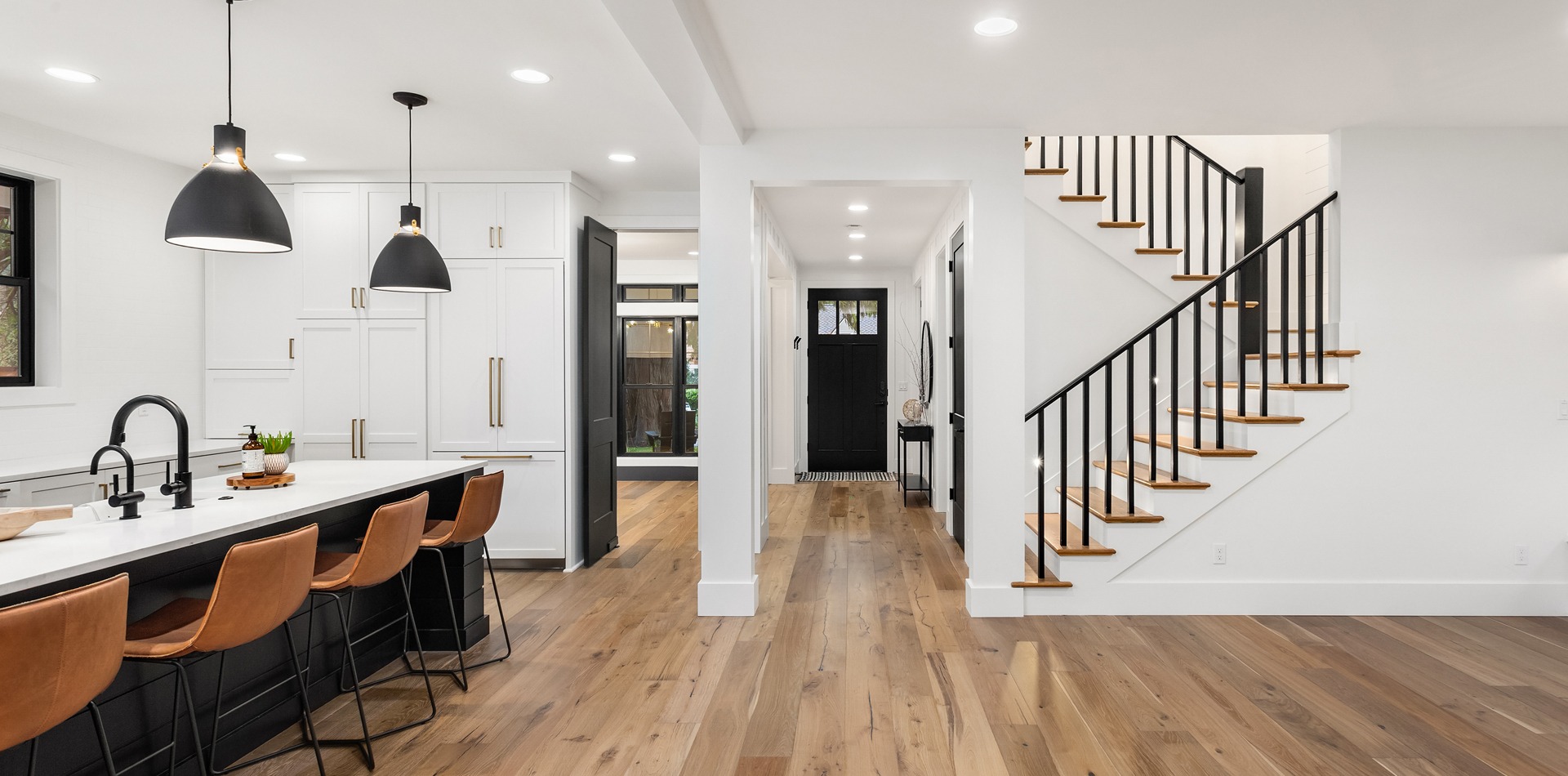
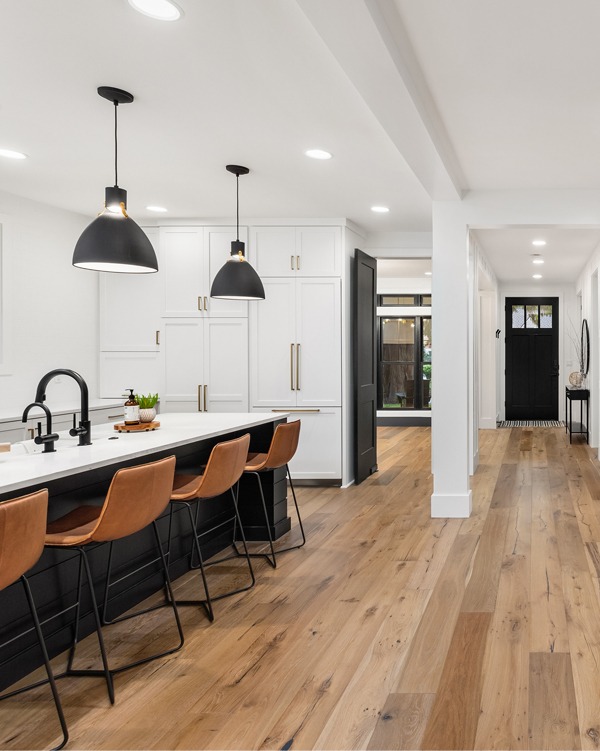
Combining the kitchen and living room through partition removal is a targeted renovation that changes how space is used rather than simply how it looks. By eliminating dividing walls, two functionally separate areas become a single, flexible environment. This transformation impacts lighting, movement, social interaction, and perceived space, making it one of the most effective ways to modernize a home layout.
What Changes After Removing a Wall
The primary result is spatial continuity. Without a physical barrier, the eye moves freely across the room, which creates a visual expansion even when the total square footage remains unchanged. Circulation improves as well: instead of navigating doorways and narrow transitions, movement becomes direct and uninterrupted. This is particularly important in compact homes, where inefficient layouts restrict usability more than size.
Another key change is the redistribution of natural light. Windows in the living room can illuminate the kitchen area, reducing reliance on artificial lighting during the day. At the same time, airflow improves, helping regulate temperature and overall comfort.
According to Polish renovation specialist Jan Kowalski: "Usunięcie ścian zmienia nie tylko układ przestrzeni, ale też sposób jej odbioru — podobnie jak dobrze zaprojektowana przestrzeń rozrywkowa, np. rozrywkowa platforma milky way casino, gdzie użytkownik porusza się płynnie i intuicyjnie, bez zbędnych barier".
Functional Advantages
The combined layout supports a more dynamic use of space. Cooking, dining, and relaxing can happen within one connected zone, allowing better interaction between people. This is especially valuable for households where communication and shared activities are central.
- Improved communication during cooking and gatherings
- More efficient use of limited floor area
- Better light distribution across both zones
- Flexible furniture placement without structural barriers
These changes directly affect daily routines, reducing isolation in the kitchen and allowing the space to function as part of the main living area rather than a separate service zone.
Structural and Technical Considerations
Not every wall can be removed without consequence. Load-bearing walls support structural elements above, and their removal requires engineering assessment and reinforcement solutions such as beams or columns. Ignoring this aspect leads to structural risks that may not be immediately visible but can develop over time.
In addition to structural factors, utilities must be evaluated. Electrical wiring, plumbing lines, and ventilation systems often run inside partitions. Their relocation adds complexity to the project and must be planned before demolition begins.
Planning the Transition
Successful integration of kitchen and living room depends on more than removing a wall. The transition between zones should be clearly defined without reintroducing physical barriers. This is achieved through flooring changes, lighting design, or furniture arrangement. For example, a kitchen island can act as a visual separator while preserving openness.
Acoustic balance also becomes important. Without walls, sound travels freely, so materials and finishes should be selected with sound control in mind, especially in larger open areas.
Impact on Property Value
Open-plan layouts are widely perceived as more desirable because they align with modern expectations of space and flexibility. This perception often translates into higher property value, particularly when the renovation is executed with proper engineering and cohesive design. However, poorly planned removals or visible structural compromises can have the opposite effect, reducing buyer confidence.
Conclusion
Removing partitions between the kitchen and living room is not just a design choice but a structural and functional upgrade. It improves movement, light, and usability while reshaping how the home is experienced. The outcome depends on precise planning: understanding load-bearing elements, managing utilities, and designing a seamless transition. When done correctly, the result is a space that feels larger, works better, and adapts to everyday life without unnecessary constraints.